
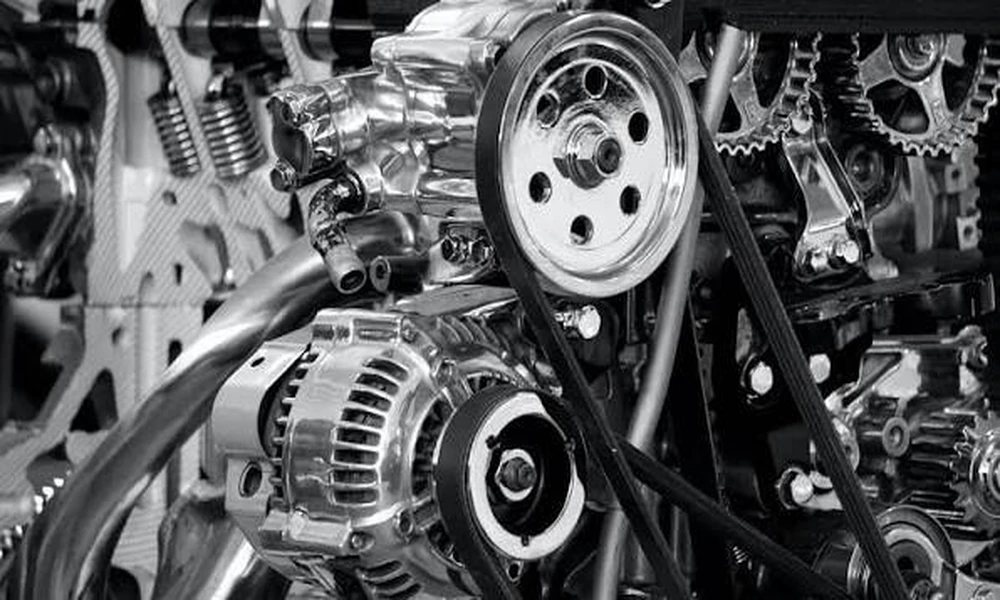
The badge on the valve cover can read the same while the engine underneath behaves differently. A Honda B-series built for the Japanese domestic market and one built for North America share a family resemblance, yet they often differ in compression, cam profiles, output, and emissions hardware. Understanding those differences is the whole point for anyone weighing an imported engine against a domestic replacement.
JDM stands for Japanese Domestic Market, meaning the engine was produced for vehicles sold inside Japan. USDM refers to the United States Domestic Market specification. Same manufacturer, same general design, different tuning targets shaped by different regulations, fuel, and buyer expectations.
Why the same engine code can make different power
Japanese-market engines historically ran higher compression ratios and more aggressive cam timing than their North American counterparts. The reasons are regulatory and commercial. Japan’s emissions and fuel standards, combined with a domestic appetite for high-revving performance, pushed manufacturers to tune for output. North American versions were often detuned to meet stricter or simply different emissions targets and to run on the fuel commonly available here.
The classic example is Honda’s VTEC engines. Certain JDM B-series and K-series variants made meaningfully more horsepower than the USDM versions wearing similar codes, thanks to higher compression and different valvetrain specs. The same pattern shows up across brands. If you want a side-by-side breakdown of specific engine families and which version made what, you can click here to compare available units directly.
This is exactly why the swap community gravitates toward JDM units. A factory engine that already makes more power, sourced at a reasonable price, is an appealing foundation for a build.
Are JDM engines really lower mileage?
Generally, yes, and the reason is structural rather than coincidental. Japan’s mandatory inspection regime, the shaken system, raises the cost of keeping older vehicles on the road. As cars age, inspection and compliance costs climb, so owners replace vehicles earlier than American drivers typically do. The result is a steady supply of relatively low-mileage engines pulled from cars retired well before the end of their mechanical life.
That supply is the engine behind the entire JDM import market. It is also why a Japanese-market unit can often be had with fewer miles than a comparable used domestic engine sourced from a salvage yard here.
Does the higher-output tuning hurt reliability?
This is a fair worry, and the answer is mostly reassuring. The Japanese-market versions were not stressed-out, fragile race engines. They were production units built to the same fundamental durability standards as their North American siblings, just tuned with higher compression or different cam timing. A factory JDM engine is engineered to last, not to be a grenade.
The caveat is fuel and maintenance. Higher-compression engines generally want higher-octane fuel to run their best and avoid knock, so a JDM unit may prefer premium where the USDM version tolerated regular. Feed it the right fuel and keep up with maintenance, and the longevity gap between a JDM and USDM engine of the same family is small. The platforms with strong reputations, Honda’s K-series, Toyota’s bulletproof sixes, Nissan’s robust fours, keep those reputations whether the engine was built for Tokyo or Texas. Reliability follows maintenance far more than it follows the market the engine was originally tuned for.
Do JDM engines pass emissions in the United States?
This is where buyers need to be careful and honest with themselves. Emissions compliance is determined at the state and local level, and rules vary widely. Some states have no testing at all. Others have strict programs that check for tampering and require specific equipment to remain in place.
A JDM engine that physically bolts into your chassis does not automatically mean a street-legal, emissions-compliant car in every jurisdiction. In areas with testing, you may need to retain or adapt the emissions hardware your vehicle originally came with. The smart approach is to confirm your local requirements before you buy, not after the engine is sitting in the bay. The EPA sets a federal framework, but the practical enforcement that affects you happens locally.
What about fitment and wiring?
A JDM and USDM engine of the same family usually share mounting points, but the supporting systems can differ. Sensor types, connector styles, intake routing, and ECU communication may not match your existing harness one for one. Some swaps are nearly plug and play. Others require adapting the wiring or sourcing a compatible ECU.
This is where buying a complete unit pays off. An engine that arrives with its intake, sensors, and accessories gives you the parts you need to resolve fitment, rather than leaving you hunting for components mid-project. Before committing, confirm exactly what hardware is included and how it maps to your car’s year and trim. The cars whose engines swap most cleanly tend to be the popular Honda, Toyota, Nissan, and Subaru platforms, where the community has already mapped out which JDM units drop in with minimal fuss and which need adapting. That accumulated knowledge turns a potentially tricky job into a documented one.
Cost: where JDM usually wins
For comparable condition, an imported Japanese engine frequently undercuts the cost of a new crate engine and competes well against a rebuilt domestic unit. The value proposition is strongest on platforms where the JDM version also brings a performance advantage, like a higher-output Honda or a turbocharged Subaru or Mitsubishi engine.
Rebuilding your existing engine is the other option, and it has merits. A quality rebuild gives you a known history and fresh internals. But it also takes time and skilled labor, and the bill can climb past the cost of a low-mileage import once machine work enters the picture. For many owners, a tested JDM unit with a warranty is the faster, cheaper path back on the road.
So which should you choose?
It comes down to your goal. If you want more power and a strong value, and you have confirmed your local emissions situation, a JDM engine is hard to beat, especially on performance-oriented Honda, Nissan, Subaru, or Toyota platforms. If you live in a strict emissions area and want zero compliance risk, a matching USDM replacement or a rebuild of your original engine keeps things simple.
The mistake is treating the two as interchangeable. They are siblings, not twins. A JDM engine can deliver more performance per dollar than almost any other option, provided you go in understanding the compression, the wiring, and the emissions realities rather than assuming the badge tells the whole story. Do that homework, buy a complete and tested unit, and the imported route rewards you with a car that often runs better than it did from the factory.